
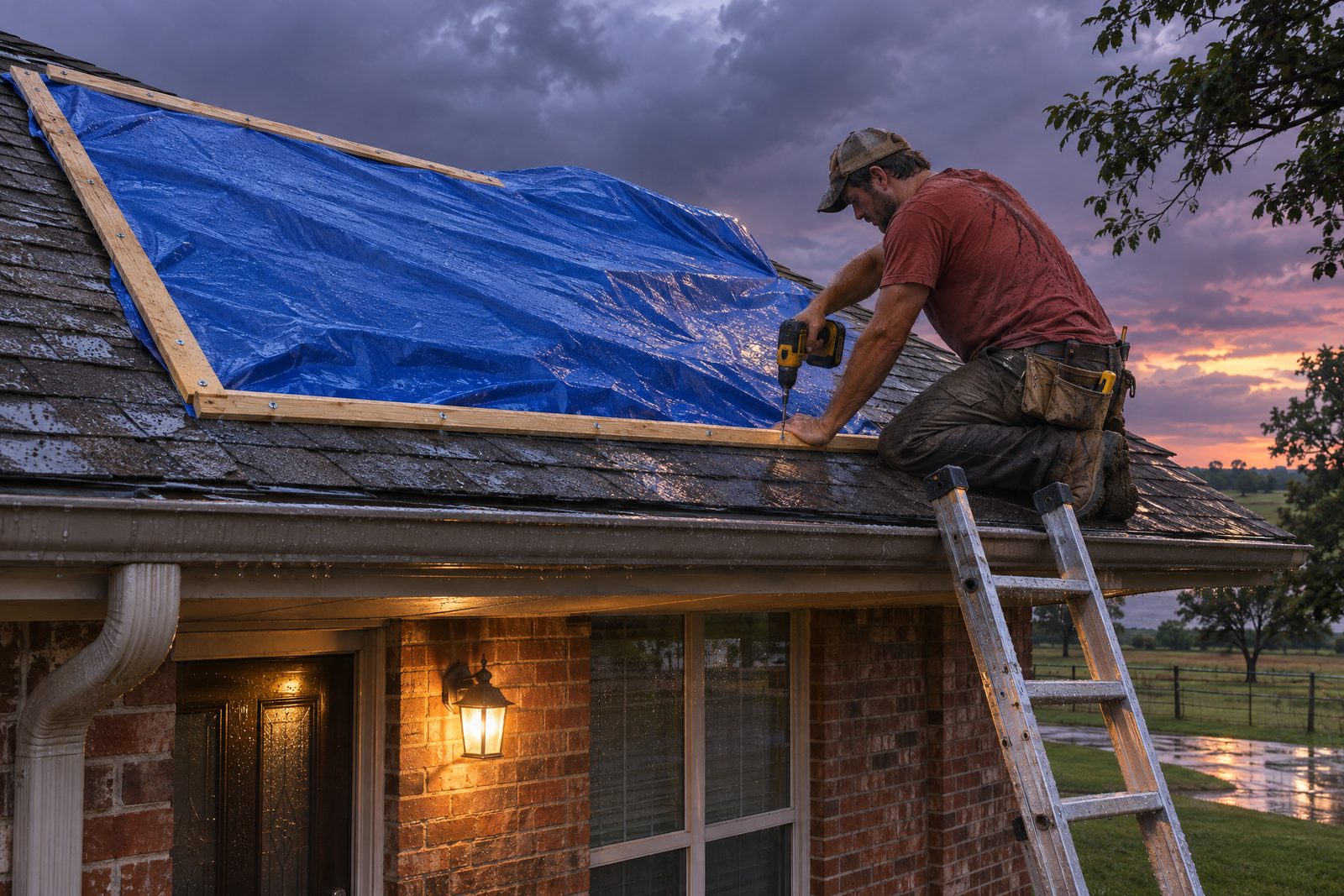
Emergency roof tarping in Edmond, OK
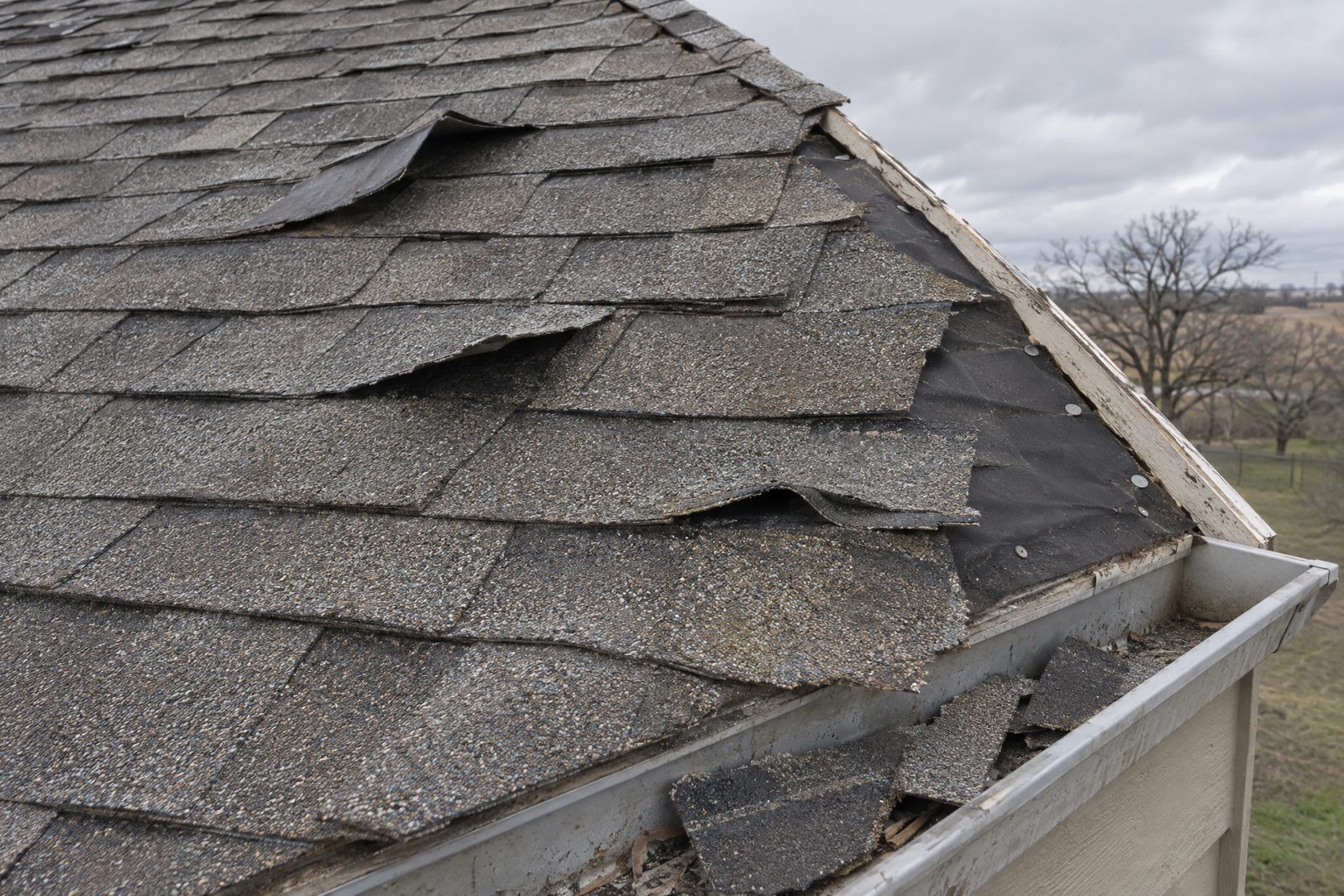
If the wind has torn shingles off and rain is getting in, a tarp run up and over the ridge and battened down with wood strips keeps the house dry until the roof is repaired. We photograph the damage before the tarp goes on, so your adjuster can still see it, and we answer the phone the night of a storm until the last tarp is down.
- Battened with wood, not weighted with bricks
- Damage photographed before it is covered
- The night of the storm, until the last tarp is down
Tell us where the water is coming in
We answer the same day. The night of a storm, we answer until the last tarp is down.
Shingles gone and rain coming in right now? Call or text: 405-555-0147
How a tarp goes on, the night of the storm
The same five steps on every roof, whatever the hour.
Photograph the damage first.
Every opening, lifted tab and missing shingle, dated, before anything covers it.
Clear the loose pieces.
Torn tabs and branches come off so they do not puncture the tarp from underneath.
Run the tarp up and over the ridge.
Water that runs down the roof runs over the tarp, not under its top edge.
Batten it down with wood strips.
Strips along every edge, fastened through the tarp into the deck, so the wind has nothing to grab.
Check inside before we leave.
We look at the ceiling and the attic and tell you what to watch overnight.
Book a free wind and storm check
“The wind took a strip of shingles off the back slope at ten at night. Cal had a tarp battened down before midnight, and the next week he showed us why the old roof let go: staples instead of nails along the edge. The new roof went on with a sealed deck and ring-shank nails.”
A tarp held with bricks becomes a sail
Most tarps we replace after the next storm were held down with bricks, sandbags or a few staples. Wind gets under the loose edge, fills the tarp like a sail and either throws it into the yard or drags it across the shingles that were still fine.
A battened tarp has wood strips along every edge, fastened through the tarp into the roof deck. The top edge goes over the ridge and down the far side, so rain cannot run under it. Nothing flaps, so nothing works loose in the next gust.
The tarp is the first step. When the weather clears we come back, check the roof edges and write the estimate for the repair or, if the roof is past it, the replacement.
While you wait for us, do this from inside
None of these need a ladder or a trip outside in the storm.
Catch the water
Buckets or towels under every drip. If a ceiling is sagging with water, keep people and pets out of that room.
Move what matters
Electronics, papers and furniture away from the wet area. Photograph anything already soaked before you move it.
Photograph the inside
The ceiling stain, the drip, the wet floor. Your adjuster will want the inside as well as the roof.
Note the time
When the wind hit and when the water started. It goes in your claim notes with our dated roof photos.
The tarp, the photos and your claim
A tarp is about stopping more water, but it is also part of your claim record. That is why the photos come first. Once a tarp is battened down, nobody can see under it without taking it off, so the dated photos we take beforehand are the record of what the wind did.
You get a written invoice for the tarp on its own, separate from any repair estimate. Check your policy for what it says about protecting the house after damage, and keep the invoice with your claim papers.
Signing for a tarp is not signing for a roof. If a storm crew asks you to sign a contract for the whole roof to get a tarp on, you do not have to. Read your rights under Oklahoma's roofing law on the storm damage page.
We tarp roofs across Oklahoma City, Moore, Norman, Yukon and Guthrie, as well as Edmond.
Emergency tarping questions we hear most
How fast can you get a tarp on?
It depends on how many roofs the storm opened and how far you are from Edmond. Call or text 405-555-0147 with the address and what is happening inside. We tell you honestly when we can be there, and the night of a storm we keep answering until the last tarp is down.
Should I put a tarp on myself?
Please do not go up on a wet roof in the dark or in wind. If water is coming in, work from inside: move what you can, set buckets under the drips and photograph the ceiling. A tarp on a roof needs to go over the ridge and be battened down, which is a job for two people on a dry, calm roof.
Will a tarp hide the damage from my adjuster?
Not if it is photographed first. We take dated photos of every opening, lifted tab and missing shingle before the tarp goes on, and you get copies. The adjuster sees the damage in the photos and the tarp shows you acted to stop more water getting in.
How long can a tarp stay on?
A battened tarp is meant to hold until the repair, not to replace the roof. Sun breaks down the plastic and each storm works at the edges. We check it if another storm comes through before the repair, and we take it off when the new shingles go on.
Does my insurance cover the tarp?
That is up to your policy, so read it or call your agent. Keep our written invoice for the tarp with your claim papers. Your rights when you sign a roofing contract after a storm are on the storm damage page.
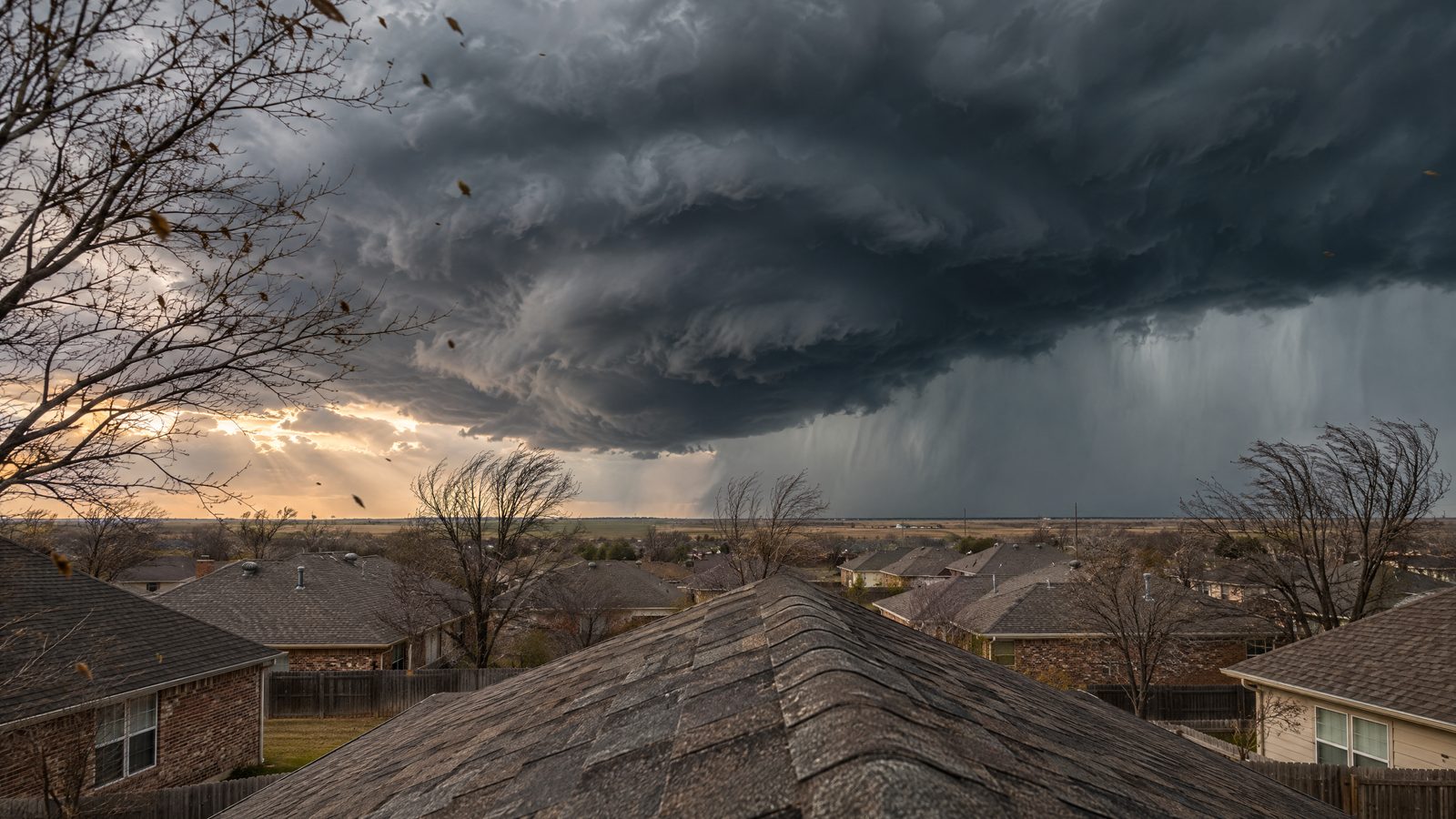
Water coming in? Call or text now.
Tell us the address and where the water is getting in. If it can wait until morning, send the form and we will book a storm check.
Book a free wind and storm check
We answer the same day. The night of a storm, we answer until the last tarp is down.
Shingles gone and rain coming in right now? Call or text: 405-555-0147